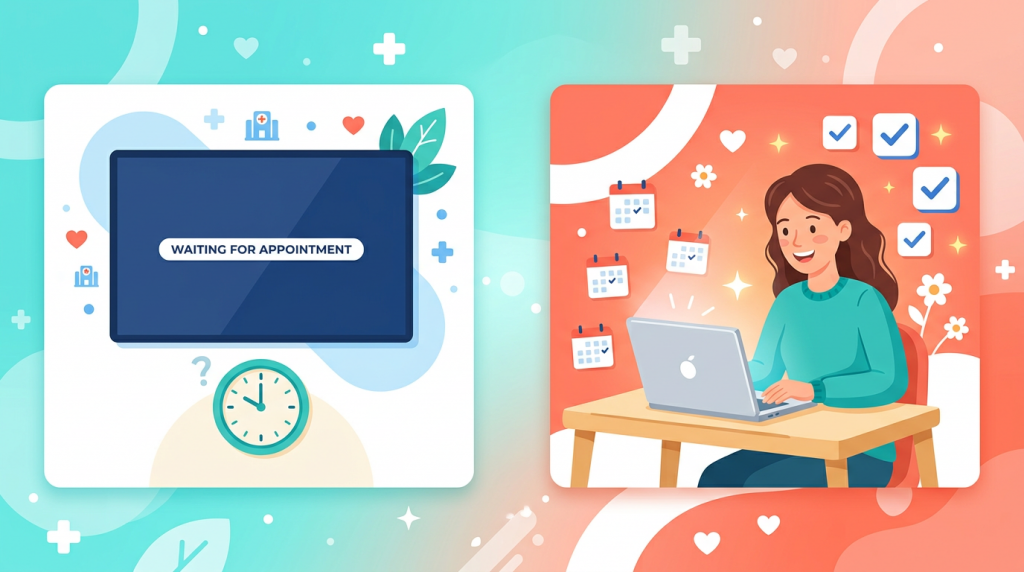
Here's something that doesn't make sense at first glance: your telehealth no-show rate is probably higher than an in-person clinic's. The patient is already home. The appointment is just a click away. And yet, they don't show up.
If you're running a virtual-first practice, you've felt this pain. Empty slots that should have been revenue. Clinicians sitting in front of cameras with no one to see. The creeping suspicion that the very convenience of telehealth is actually working against you.
You're not imagining it. Data from virtual clinics consistently shows no-show rates that match or exceed physical practices—sometimes by a wide margin. But it doesn't have to be this way. The problem isn't telehealth itself. It's how most clinics handle the journey from booking to appointment.
Let's look at why this happens, and what you can actually do to fix your telehealth no-show rate.
When someone books an in-person appointment, they've committed to a physical journey. They'll drive, find parking, and sit in a waiting room. That hassle creates a strange kind of mental investment—they've already paid a cost before arriving.
Telehealth removes all that. Which is brilliant for access. But it also means the penalty for skipping drops to nearly zero. There's no drive to "waste." No receptionist to face. Just a link they can ignore.
Plus, many patients book virtual appointments in a moment of late-night motivation or lunch-break urgency. By the time the appointment rolls around, that feeling has faded. The session starts to feel optional.
So how do you rebuild commitment without reintroducing friction?
Let's start with the obvious. Yes, you need online appointment reminders. SMS and email nudges at 48 hours, 24 hours, and one hour before are the bare minimum.
But if reminders alone fixed no-shows, you wouldn't be reading this, would you?
The trouble is, reminders are passive. A text saying "Don't forget your appointment tomorrow at 2pm" is easy to swipe away. It doesn't ask the patient to do anything.
The clinics that actually slash their no-show rates pair reminders with active engagement steps—tasks the patient needs to complete before the session. That's where the magic happens.
Think about it this way. Every small action a patient takes before their appointment makes them more likely to attend. It's the commitment principle—once someone starts a process, they tend to finish it.
Here's what that looks like in practice:
Dr Sarah runs a virtual dermatology clinic. She was seeing a 22% no-show rate—brutal for her revenue and her clinicians' morale. After she introduced a mandatory pre-appointment photo upload and symptom questionnaire through her Patient Portal, completed within 24 hours of booking, her no-show rate dropped to 9% within three months. Patients who'd already uploaded photos of their skin concern felt invested. They'd begun the consultation before it even started.
The lesson? Don't just remind patients about the appointment. Give them a reason to engage with it before they show up.
This makes some founders nervous. It feels like it might scare patients off. But the numbers tell a different story.
Clinics that collect payment (or at least a deposit) at booking consistently report lower no-show rates than those that invoice after. The difference can be huge—some practices see drops of 30-50% in missed appointments after switching to upfront payment.
Why? Because money changes things. A patient who's already spent £75 or $120 is far less likely to ghost the appointment. And if they do need to cancel, they're motivated to reschedule rather than forfeit the fee.
That doesn't mean being draconian. A clear, fair approach works perfectly:
That last point matters more than you'd think. If cancelling is easy but rescheduling requires a phone call or an email chain, you'll lose the patient entirely. If rescheduling is just a couple of taps on their phone, you keep both the revenue and the relationship. Admin overhead goes down, and patient retention goes up.
This is where many practice management tools miss the mark. They obsess over speed: fewest clicks possible, minimum information required, zero friction. Fast booking feels like good UX.
But a flow that's too smooth can actually hurt attendance. When booking requires almost nothing from the patient, they barely remember doing it.
You need a flow that's smooth but meaningful. Each step should feel useful, not bureaucratic:
Unlike systems that force you to stitch together a booking app, a separate payment gateway, and a standalone video tool, having this all in one place makes the journey logical for the patient. Each touchpoint is a moment of engagement. And each moment of engagement makes the patient more likely to show up.
Here's what gets missed when we talk about telehealth no-shows: miss that first appointment and you've probably lost them for good. They don't rebook. They don't come back. They find someone else—or they simply stop seeking care.
So fixing no-shows isn't just about protecting today's revenue. It's about patient acquisition and retention over the long term. Every patient who actually attends their first virtual consultation is far more likely to return for follow-ups, recommend your clinic, and become a long-term part of your practice.
That means your booking-to-appointment experience isn't just an operational detail. It's your first impression.
Try this quick audit. Ask yourself:
If you said "no" to more than one, your systems are likely contributing to the problem instead of solving it. Manual processes and disconnected tools don't just create admin overhead—they actively cost you patients.
Function365 brings booking, Stripe payments, a genuinely helpful Patient Portal, intake forms, reminders, and built-in telehealth together in one platform. It's designed specifically for multidisciplinary and virtual-first clinics like yours. No stitching together five different tools. No gaps where patients fall through.
Here's something that doesn't make sense at first glance: your telehealth no-show rate is probably higher than an in-person clinic's. The patient is already home. The appointment is just a click away. And yet, they don't show up.
If you're running a virtual-first practice, you've felt this pain. Empty slots that should have been revenue. Clinicians sitting in front of cameras with no one to see. The creeping suspicion that the very convenience of telehealth is actually working against you.
You're not imagining it. Data from virtual clinics consistently shows no-show rates that match or exceed physical practices—sometimes by a wide margin. But it doesn't have to be this way. The problem isn't telehealth itself. It's how most clinics handle the journey from booking to appointment.
Let's look at why this happens, and what you can actually do to fix your telehealth no-show rate.
When someone books an in-person appointment, they've committed to a physical journey. They'll drive, find parking, and sit in a waiting room. That hassle creates a strange kind of mental investment—they've already paid a cost before arriving.
Telehealth removes all that. Which is brilliant for access. But it also means the penalty for skipping drops to nearly zero. There's no drive to "waste." No receptionist to face. Just a link they can ignore.
Plus, many patients book virtual appointments in a moment of late-night motivation or lunch-break urgency. By the time the appointment rolls around, that feeling has faded. The session starts to feel optional.
So how do you rebuild commitment without reintroducing friction?
Let's start with the obvious. Yes, you need online appointment reminders. SMS and email nudges at 48 hours, 24 hours, and one hour before are the bare minimum.
But if reminders alone fixed no-shows, you wouldn't be reading this, would you?
The trouble is, reminders are passive. A text saying "Don't forget your appointment tomorrow at 2pm" is easy to swipe away. It doesn't ask the patient to do anything.
The clinics that actually slash their no-show rates pair reminders with active engagement steps—tasks the patient needs to complete before the session. That's where the magic happens.
Think about it this way. Every small action a patient takes before their appointment makes them more likely to attend. It's the commitment principle—once someone starts a process, they tend to finish it.
Here's what that looks like in practice:
Dr Sarah runs a virtual dermatology clinic. She was seeing a 22% no-show rate—brutal for her revenue and her clinicians' morale. After she introduced a mandatory pre-appointment photo upload and symptom questionnaire through her Patient Portal, completed within 24 hours of booking, her no-show rate dropped to 9% within three months. Patients who'd already uploaded photos of their skin concern felt invested. They'd begun the consultation before it even started.
The lesson? Don't just remind patients about the appointment. Give them a reason to engage with it before they show up.
This makes some founders nervous. It feels like it might scare patients off. But the numbers tell a different story.
Clinics that collect payment (or at least a deposit) at booking consistently report lower no-show rates than those that invoice after. The difference can be huge—some practices see drops of 30-50% in missed appointments after switching to upfront payment.
Why? Because money changes things. A patient who's already spent £75 or $120 is far less likely to ghost the appointment. And if they do need to cancel, they're motivated to reschedule rather than forfeit the fee.
That doesn't mean being draconian. A clear, fair approach works perfectly:
That last point matters more than you'd think. If cancelling is easy but rescheduling requires a phone call or an email chain, you'll lose the patient entirely. If rescheduling is just a couple of taps on their phone, you keep both the revenue and the relationship. Admin overhead goes down, and patient retention goes up.
This is where many practice management tools miss the mark. They obsess over speed: fewest clicks possible, minimum information required, zero friction. Fast booking feels like good UX.
But a flow that's too smooth can actually hurt attendance. When booking requires almost nothing from the patient, they barely remember doing it.
You need a flow that's smooth but meaningful. Each step should feel useful, not bureaucratic:
Unlike systems that force you to stitch together a booking app, a separate payment gateway, and a standalone video tool, having this all in one place makes the journey logical for the patient. Each touchpoint is a moment of engagement. And each moment of engagement makes the patient more likely to show up.
Here's what gets missed when we talk about telehealth no-shows: miss that first appointment and you've probably lost them for good. They don't rebook. They don't come back. They find someone else—or they simply stop seeking care.
So fixing no-shows isn't just about protecting today's revenue. It's about patient acquisition and retention over the long term. Every patient who actually attends their first virtual consultation is far more likely to return for follow-ups, recommend your clinic, and become a long-term part of your practice.
That means your booking-to-appointment experience isn't just an operational detail. It's your first impression.
Try this quick audit. Ask yourself:
If you said "no" to more than one, your systems are likely contributing to the problem instead of solving it. Manual processes and disconnected tools don't just create admin overhead—they actively cost you patients.
Function365 brings booking, Stripe payments, a genuinely helpful Patient Portal, intake forms, reminders, and built-in telehealth together in one platform. It's designed specifically for multidisciplinary and virtual-first clinics like yours. No stitching together five different tools. No gaps where patients fall through.