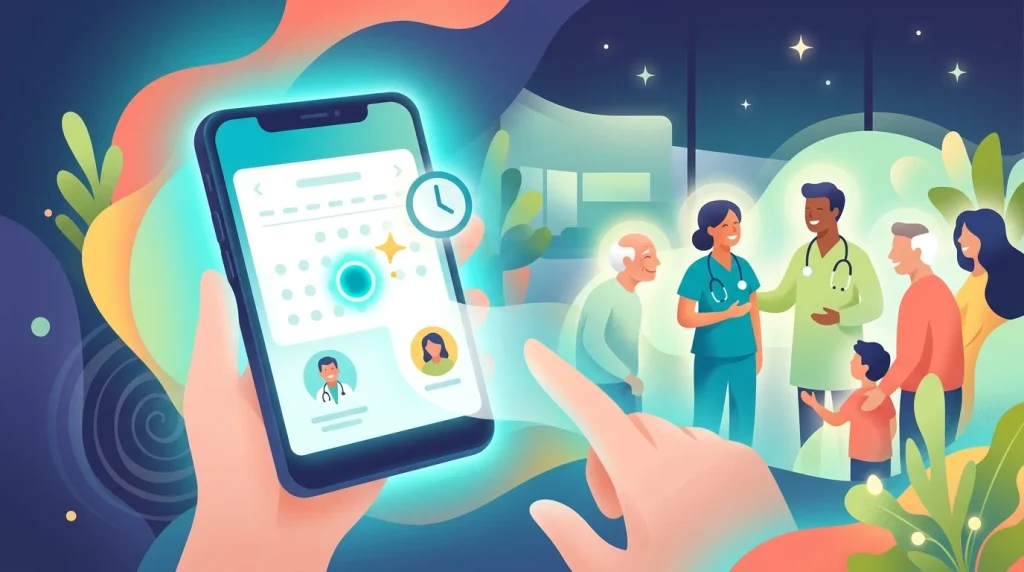
It’s 10pm on a Sunday. Daniel picks up his phone, searches for a private GP, lands on your clinic’s website, and taps “Book appointment.” Instead of a booking, he gets a message: “Please call Monday to Friday, 9am to 5pm.” That’s online booking for clinics, or rather the absence of it, handing a motivated patient a polite “maybe later.” And every time that happens, an enquiry you’ve already paid to attract walks next door.
The fix is simpler than it sounds: let people book while they’re holding the phone at 10pm, not after they hang up and forget.
When your booking page works around the clock, a Sunday-night search becomes a Monday slot without anyone picking up the phone. The diary fills with bookings that arrived while the front desk was dark. That’s the same demand you already have, just kept instead of dropped. No extra ad spend. No extra staff. Just a door that’s actually open when patients are standing in front of it.
Now picture the alternative. Monday morning, Sarah arrives to a voicemail box and six web forms, all from people who tried to book over the weekend. She starts dialling. Two calls go to voicemail. One person is now in a meeting. Another has already booked elsewhere. By the time she’s worked through the list, it’s nine thirty, she’s lost an hour she didn’t have, and two of those six enquiries are gone for good.
It’s the clinic equivalent of a game of catch where the ball keeps rolling under the sofa. Sarah’s chasing leads that were already in her hand, but the process dropped them.
Self-service booking removes those steps. The patient books their own slot, so Sarah doesn’t have to chase it. Her Monday starts with a diary that filled itself overnight, and she can get on with the day’s actual work.
So you’ve captured Daniel’s Sunday-night booking. Brilliant. Now the second risk: he doesn’t turn up.
No-shows are the quiet margin killer. An empty 2pm Tuesday slot doesn’t send you an angry email. It just sits there, costing a consultation fee, while the diary still looks busy. Over a month, across multiple sites, those gaps add up to real money.
This is where automated reminders earn their keep. When a reminder goes out by text or email a day or two before the appointment, patients who would otherwise forget get a gentle nudge. And if they can’t make it, a system that lets them rebook or cancel frees the slot for someone else. The gap gets filled instead of sitting empty.
Plenty of tools will give you a booking widget. Then a separate reminder service. Then another system for payments, and one for the clinical record. Each one does its job. The trouble starts at the joins.
Picture the version where they don’t talk. A patient books online on Sunday night, but the booking sits in one tool and doesn’t sync to your main diary. Monday morning, your reception team is working from a different screen. Result: a double-booked 10am slot. Daniel, who took the morning off work, sits in your waiting room while another patient is already in the chair. Sarah gets to explain the situation twice, and nobody’s happy.
When your booking widget, diary, and reminders all live in separate browser tabs, you’re not managing a clinic. You’re running a reconciliation factory. The system was supposed to help with the diary, but it spends half its time creating problems the diary never used to have.
When those pieces are one system, that whole class of problem disappears. The slot a patient picks at 10pm Sunday is the same slot your front desk sees on Monday, in the same place, with the reminder already scheduled and the payment prompt ready. No copy-paste. No chasing mismatches.
And because a Function 365 setup is built around the services you actually offer, a patient booking a dietitian follow-up sees the right slot length, the right clinician, and the right intake questions, not a one-size-fits-all form that reception then has to fix by hand. The booking lands ready to go, not ready to re-type.
It’s tempting to treat patient acquisition as a marketing problem: more ads, more referrals, more reach. All useful. But look at what’s already happening. People are finding you, at 10pm on a Sunday, ready to book. The demand is turning up. It’s just hitting a “call us Monday” wall and walking off.
Before you spend more to bring people to the door, check whether the door is open when they arrive. Capturing the enquiries you already earn is usually the cheapest new patients you’ll ever add, because you’ve already paid to attract them. All that’s left is not losing them.
What would your Monday diary look like if every Sunday-night Daniel actually landed as a booking, with a reminder set and a payment prompt ready to go? That’s not a bigger marketing budget. It’s the same demand, kept instead of dropped.
If your booking page still sends people to voicemail, it’s worth a quick look at how one system changes that. A one-to-one demo is a low-stakes way to see online booking, automated reminders, and the diary all sitting in one place, so a 10pm Sunday enquiry becomes a Monday slot without anyone playing phone tag. Book a one-to-one demo and we’ll walk through how it fits the services your clinic actually offers.
It’s 10pm on a Sunday. Daniel picks up his phone, searches for a private GP, lands on your clinic’s website, and taps “Book appointment.” Instead of a booking, he gets a message: “Please call Monday to Friday, 9am to 5pm.” That’s online booking for clinics, or rather the absence of it, handing a motivated patient a polite “maybe later.” And every time that happens, an enquiry you’ve already paid to attract walks next door.
The fix is simpler than it sounds: let people book while they’re holding the phone at 10pm, not after they hang up and forget.
When your booking page works around the clock, a Sunday-night search becomes a Monday slot without anyone picking up the phone. The diary fills with bookings that arrived while the front desk was dark. That’s the same demand you already have, just kept instead of dropped. No extra ad spend. No extra staff. Just a door that’s actually open when patients are standing in front of it.
Now picture the alternative. Monday morning, Sarah arrives to a voicemail box and six web forms, all from people who tried to book over the weekend. She starts dialling. Two calls go to voicemail. One person is now in a meeting. Another has already booked elsewhere. By the time she’s worked through the list, it’s nine thirty, she’s lost an hour she didn’t have, and two of those six enquiries are gone for good.
It’s the clinic equivalent of a game of catch where the ball keeps rolling under the sofa. Sarah’s chasing leads that were already in her hand, but the process dropped them.
Self-service booking removes those steps. The patient books their own slot, so Sarah doesn’t have to chase it. Her Monday starts with a diary that filled itself overnight, and she can get on with the day’s actual work.
So you’ve captured Daniel’s Sunday-night booking. Brilliant. Now the second risk: he doesn’t turn up.
No-shows are the quiet margin killer. An empty 2pm Tuesday slot doesn’t send you an angry email. It just sits there, costing a consultation fee, while the diary still looks busy. Over a month, across multiple sites, those gaps add up to real money.
This is where automated reminders earn their keep. When a reminder goes out by text or email a day or two before the appointment, patients who would otherwise forget get a gentle nudge. And if they can’t make it, a system that lets them rebook or cancel frees the slot for someone else. The gap gets filled instead of sitting empty.
Plenty of tools will give you a booking widget. Then a separate reminder service. Then another system for payments, and one for the clinical record. Each one does its job. The trouble starts at the joins.
Picture the version where they don’t talk. A patient books online on Sunday night, but the booking sits in one tool and doesn’t sync to your main diary. Monday morning, your reception team is working from a different screen. Result: a double-booked 10am slot. Daniel, who took the morning off work, sits in your waiting room while another patient is already in the chair. Sarah gets to explain the situation twice, and nobody’s happy.
When your booking widget, diary, and reminders all live in separate browser tabs, you’re not managing a clinic. You’re running a reconciliation factory. The system was supposed to help with the diary, but it spends half its time creating problems the diary never used to have.
When those pieces are one system, that whole class of problem disappears. The slot a patient picks at 10pm Sunday is the same slot your front desk sees on Monday, in the same place, with the reminder already scheduled and the payment prompt ready. No copy-paste. No chasing mismatches.
And because a Function 365 setup is built around the services you actually offer, a patient booking a dietitian follow-up sees the right slot length, the right clinician, and the right intake questions, not a one-size-fits-all form that reception then has to fix by hand. The booking lands ready to go, not ready to re-type.
It’s tempting to treat patient acquisition as a marketing problem: more ads, more referrals, more reach. All useful. But look at what’s already happening. People are finding you, at 10pm on a Sunday, ready to book. The demand is turning up. It’s just hitting a “call us Monday” wall and walking off.
Before you spend more to bring people to the door, check whether the door is open when they arrive. Capturing the enquiries you already earn is usually the cheapest new patients you’ll ever add, because you’ve already paid to attract them. All that’s left is not losing them.
What would your Monday diary look like if every Sunday-night Daniel actually landed as a booking, with a reminder set and a payment prompt ready to go? That’s not a bigger marketing budget. It’s the same demand, kept instead of dropped.
If your booking page still sends people to voicemail, it’s worth a quick look at how one system changes that. A one-to-one demo is a low-stakes way to see online booking, automated reminders, and the diary all sitting in one place, so a 10pm Sunday enquiry becomes a Monday slot without anyone playing phone tag. Book a one-to-one demo and we’ll walk through how it fits the services your clinic actually offers.